Sperry Rail Inspection
Photographer
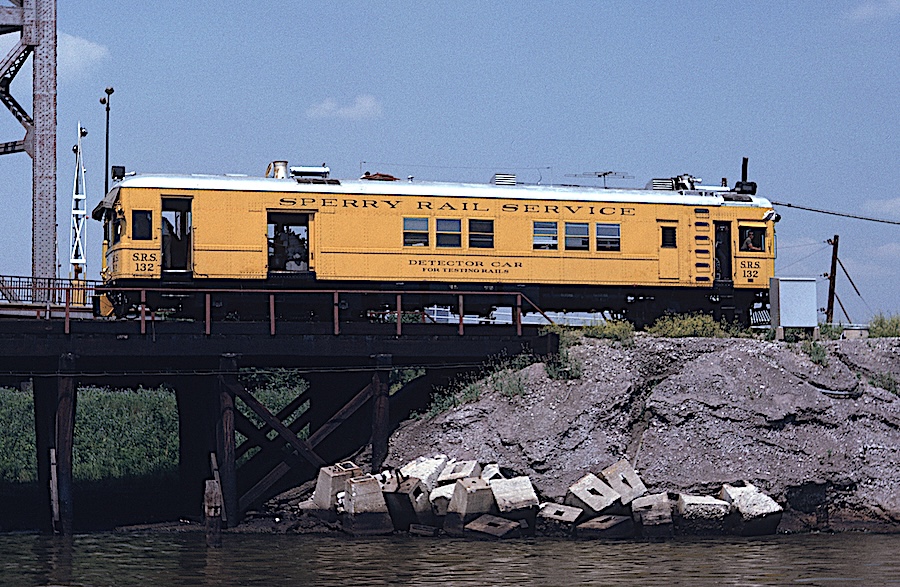
Bill Vigrass was riding a tour boat on the Calumet River on June 17, 1961, when he shot SRS #132
working on the EL line along Torrance Avenue. Car #132 was an EMC-St. Louis 1925 product,
originally built as SAL 2003. It went to SRS in January 1942.
blank |
|
|---|---|
New: 1 December 2026 |
Photo from the Kramble / Peterson Archives |
| Reporting mark: SRSX |
Formatting by: R. Craig |
Within the railroad community, Montpelior, Ohio has long been remembered as once a major hub for the Wabash Railroad between Kansas City and Detroit. A lesser known fact, the city of 3500 people was also the site of the inaugural run of Sperry Rail Service detector car #102. The date was November 1928 and the Wabash Railroad was Sperry's very first client. Equipped with induction testing gear and pulled by motor car #502, the very first commercial testing unit worked the 130-mile line to Clark Jct. Indiana. It is generally accepted tha Dr. Elmer Sperry was father of rail inspection service technology. Unfortunately photographs of his first rail inspection car which was built in concert with the American Railrod Association are scarce; so we have employed AI-generated graphics to help illustrate (below) how the car's appearance and configuration might have appeared in 1928. The metal-faced plywood coach was mounted on a Kalamazoo motor car flatbed frame. Since those early days, rail detection science has developed significantly, and his company Sperry Rail Services right along with it. However with advances in non-destructive testing technology, there has come greater competition. By the 1990s, the field of rail flaw detection companies included such names as Speno (1960), Herzog (1970), Dapco (1972), Loram (1989) and Pandrol Jackson (1990). With time, their numbers shrank through merger or consolidation. Similarly, rail detection equipment evolved from converted doodle bugs to custom-build rail cars to today's sophisticated high-rail vehicles. Moreover, several Class 1 railroads took to operating their own specialized rail and track inspection equipment to monitor track geometry, as well as structural integrity. None-the-less, the Federal Railroad Administration has stated that visual inspections remain essential in maintaining rail safety along with automated inspection technology. Thanks to one man's vision late in the 1920s along with years of continuous development of new equipment and robust systems, today's automated "electrical detective robots" have improved rail safety with greater precision and faster coverage than at any previous time. Moreover, its being accomplished with less interruptions to train schedules. GENERAL NOTES
|
|
| Rail Inspection Equipment | |
|---|---|
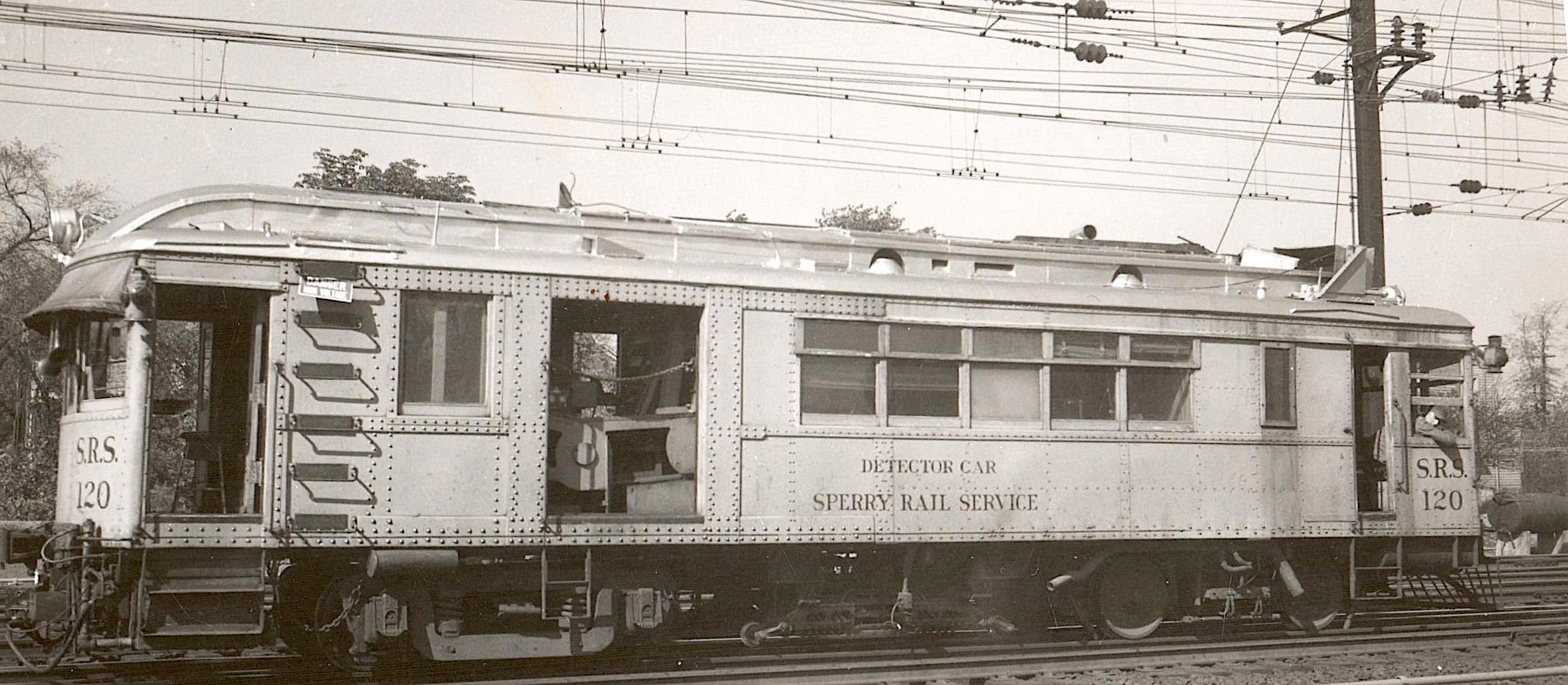 SRS #105/120 -- Brill built this Model 55 for Sperry in 1929; it originally carried road number 105. The gas-powered car was sold to Remington Arms in 1953. Note the detection car's clerestory roof which was quite common to heavy-weight passenger cars of the period. Photo was taken 10/17.1945 on the PRR at South Elizabeth, NJ. (Krambles/Peterson Archives) |
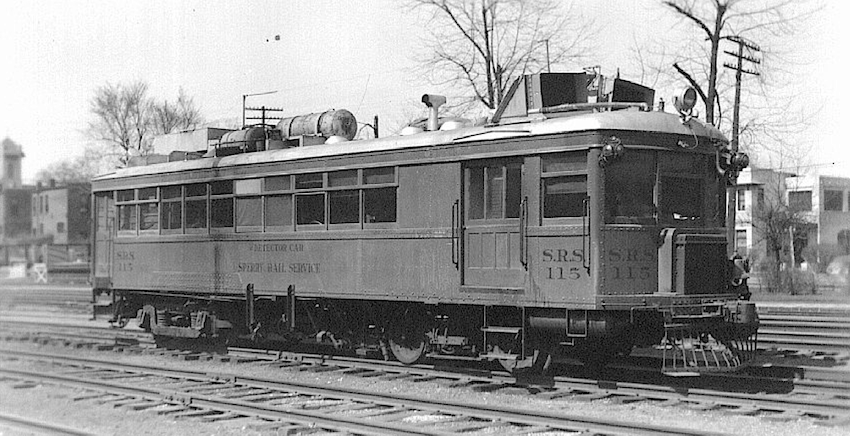 SRS #115 -- -- J.G. Brill built two new cars (#115 shown here and 116) for Sperry during 1930. By then induction testing technology had been developed to identify transverse fissures and other rail defects. The cars were re-numbered to 122 and 121 respectively.(Krambles / Peterson Archives) |
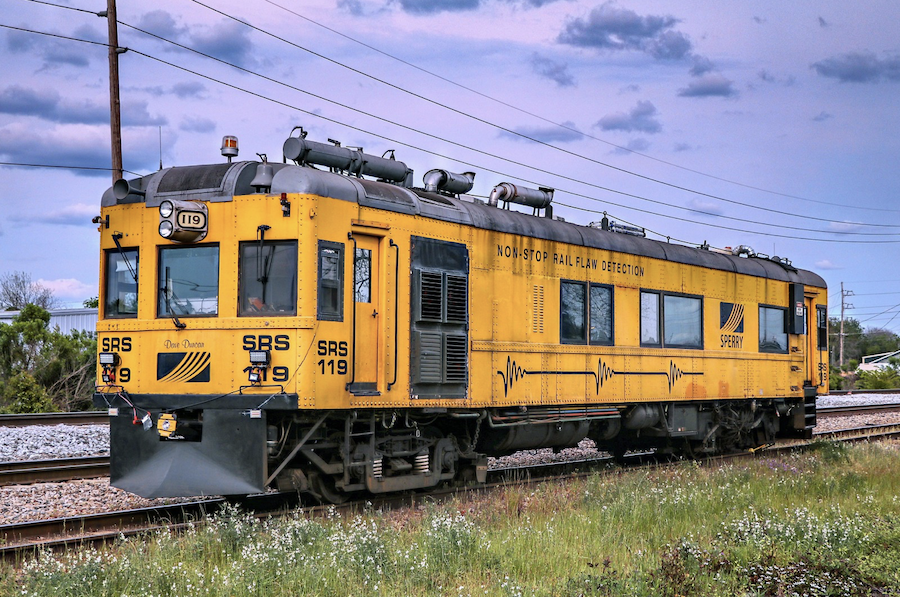  | |
SRS #119 -- In 1933, Sperry purchased Baltimore & Ohio motor coaches
(#6003 and 6004) which had been built by St.Louis Car / Electro-Motive Corporation. They were
refitted as test units #118 and 119. The latter is seen here at Cordele, Georgia on 4 April
2019. (Alan Williams, jr photo]) |
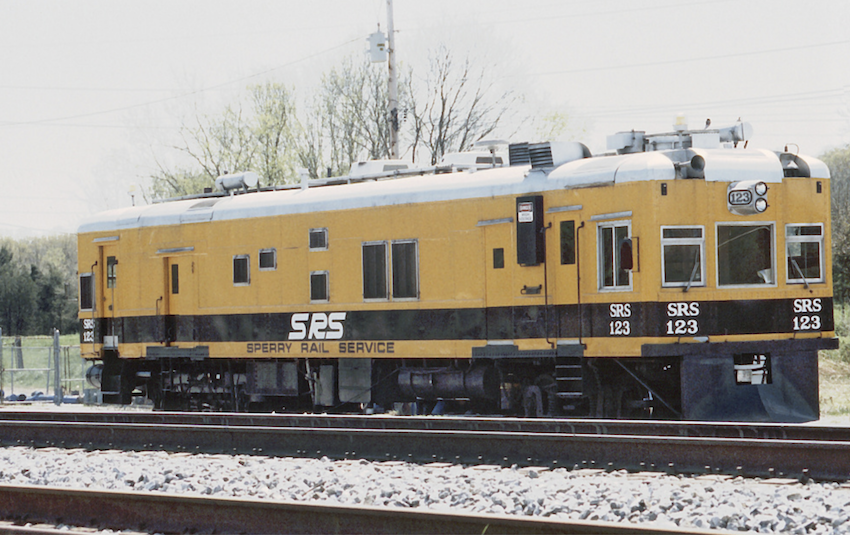
SRS-123 -- Prior to joining Sperry's fleet of detection cars, #123
had been built as motor car #14 for the Lehigh Valley. The 1928 product which had been also
built by St.Louis Car / EMC was converted to diesel power in 1960. (Karl Miller photo / Marty
Bernard collection).
|
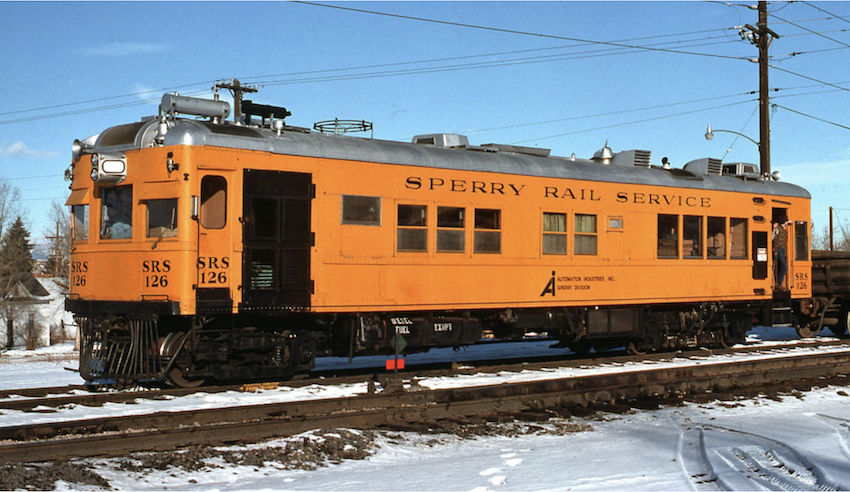  | |
SRS #126 -- There is an interesting history behind this Sperry unit.
It was built in 1927 by St.Louis Car / EMC as Demonstrator #108. Soon afterwards, the motor
car joined C&NW with road number 9900. The ex-C&NW unit joined the ranks of Sperry Detection
cars in March 1937 after a major conversion. (Bruce Black photo / Vince Porreca collection). |
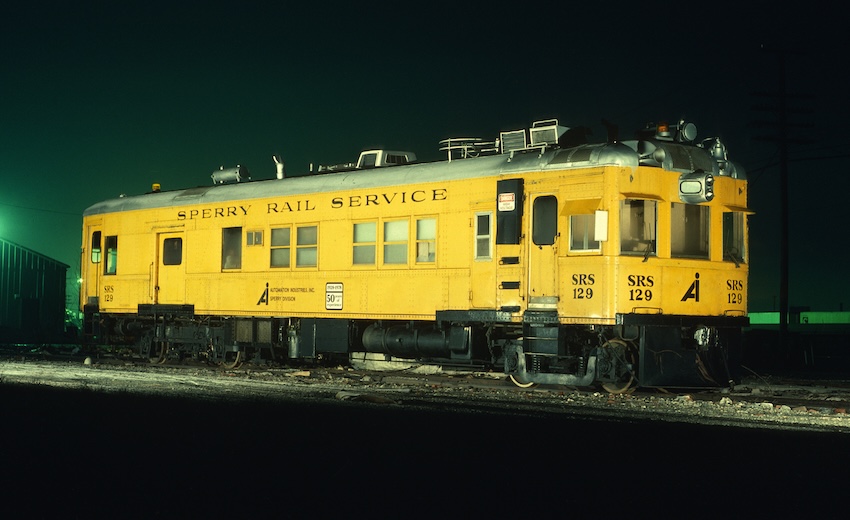
SRS #129 -- Sylvania No. 2 bulbs with Highland reflectors was the
strategy that photographer Art Peterson and a friend used to capture this night scene in the
waning hours of 1979 at Baltimore & Ohio's Barr yard outside Chicago. Acquired by SRS in 1939,
the 14-year-old #129 once belonged to the Lehigh Valley as #29. |
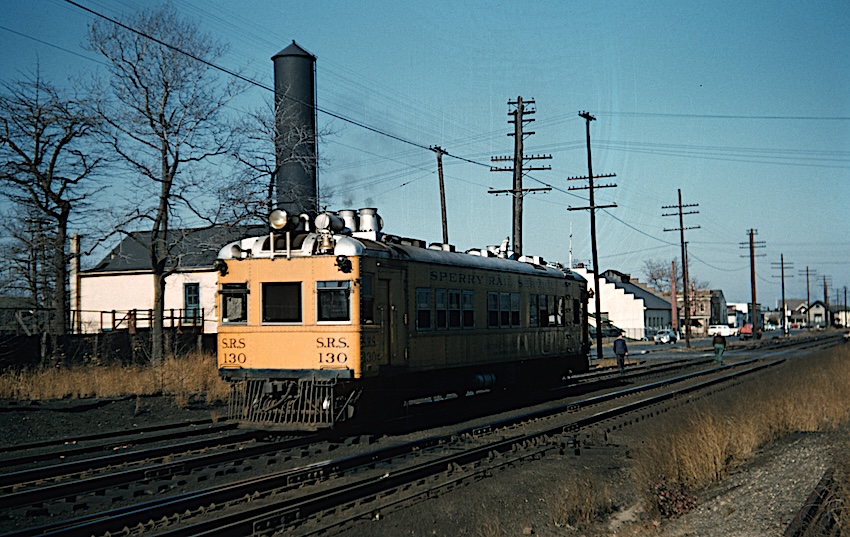  | |
SRS #130 -- Lehigh Valley was often the go-to source when Sperry
was in the market for "doodle bug" conversions. One such example is ex-LV #28 built in 1925 which
became SRS #130. The inspection car which is seen here was recorded at Belmar, NJ in November
1956. (Steve Maguire photo / Krambles / Peterson Archives collection). |
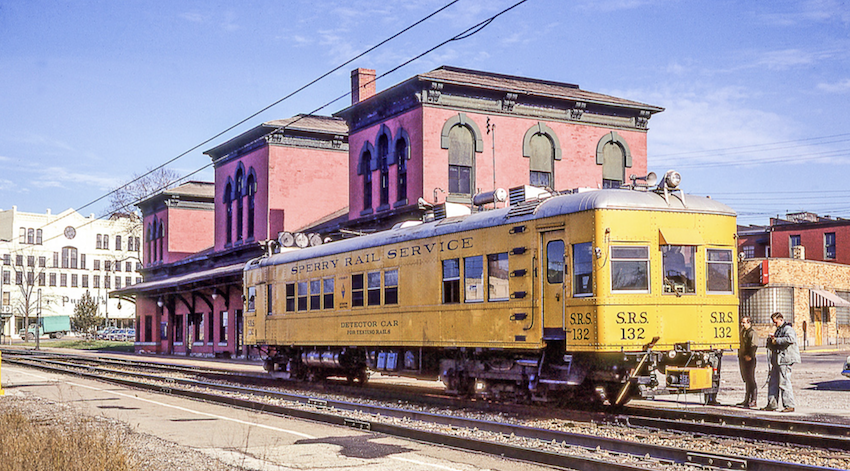
SRS #132 -- This rail detection unit was typical of the dozen or
so ex-motor cars built between 1927 and 1930 by St.Louis Car / EMC for major class one railroads,
-- Seaboard Air Line, Rock Island, LV, etc., and later sold to Sperry. Each car seem to be
configured different from the others. (Robert Farkas photo at Kent, Ohio in January 1967.) |
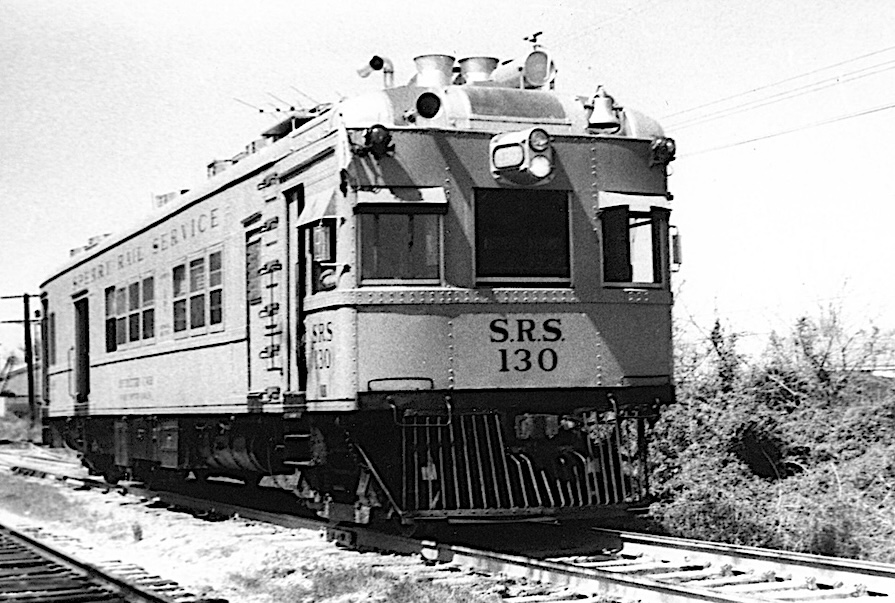  | |
SRS #130 -- The exact date and location of this 1960s photo is
unknown. The photographer was Len Dunman |
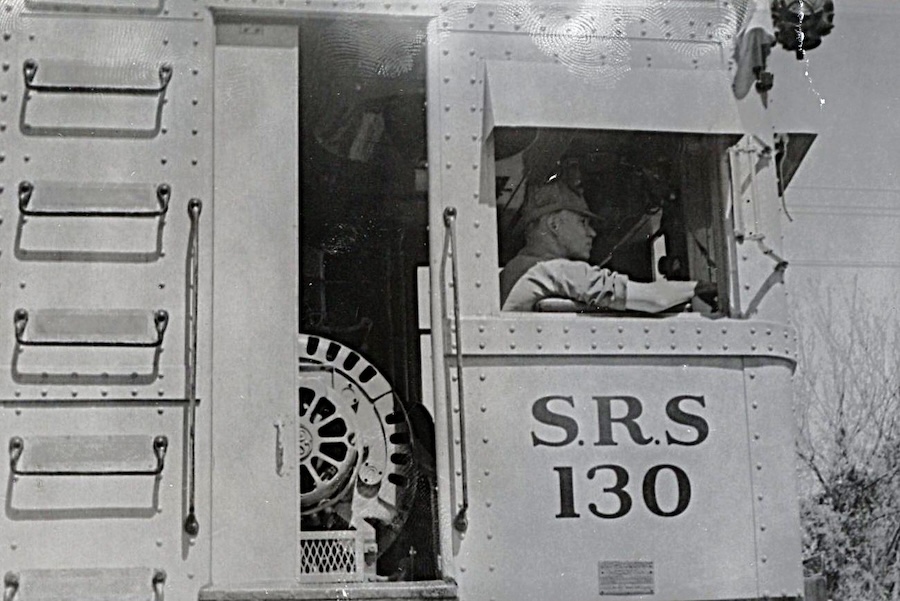
SRS #130 detail -- A Sperry rail car typically carried a crew of
four. (Len Dunman photo) |
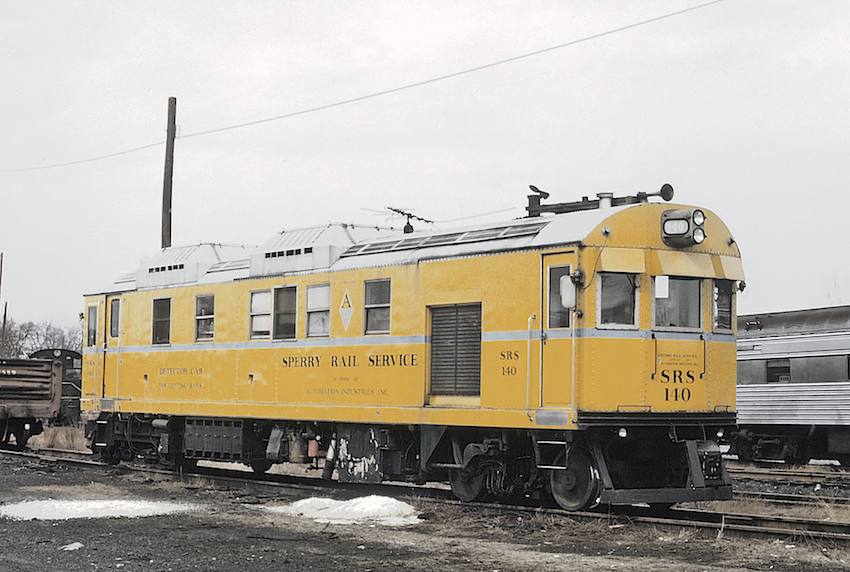  | |
SRS #140 -- Sperry Rail's car repair shop in Danbury, Connecticut
was responsible for assembling several new detection cars, including the #140. Built from the
shell of a subway car in 1966, #140 was sold to the Australian government after a ten years of s
ervice. (Bill Howes photo / Marty Bernard collection) |
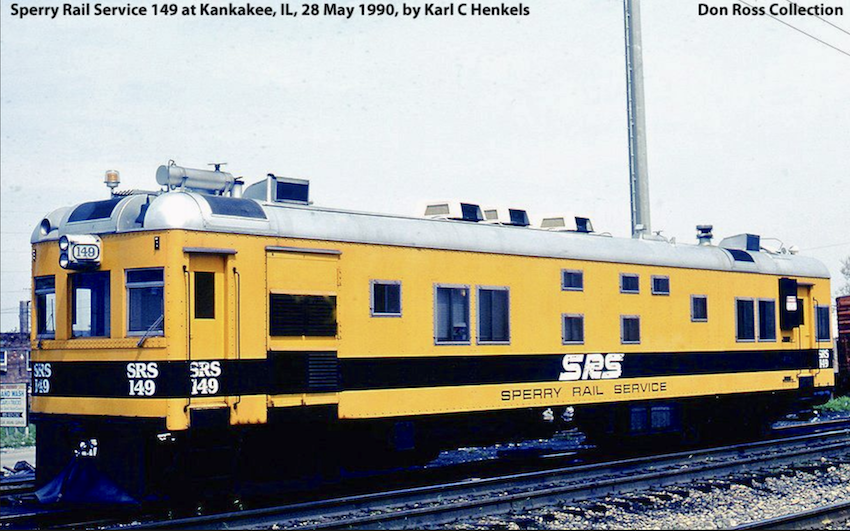
SRS #149 -- Between 1974 and 1986, Sperry's Brooklyn, NY and Danbury,
CT shops built eight new detection cars of which #149 was the final version. The carbodies were
"scratch-built" from the frame up by either the Hiillebrand or Five-Star manufacturing company.
(Karl Henkels photo / Don Ross collection). |
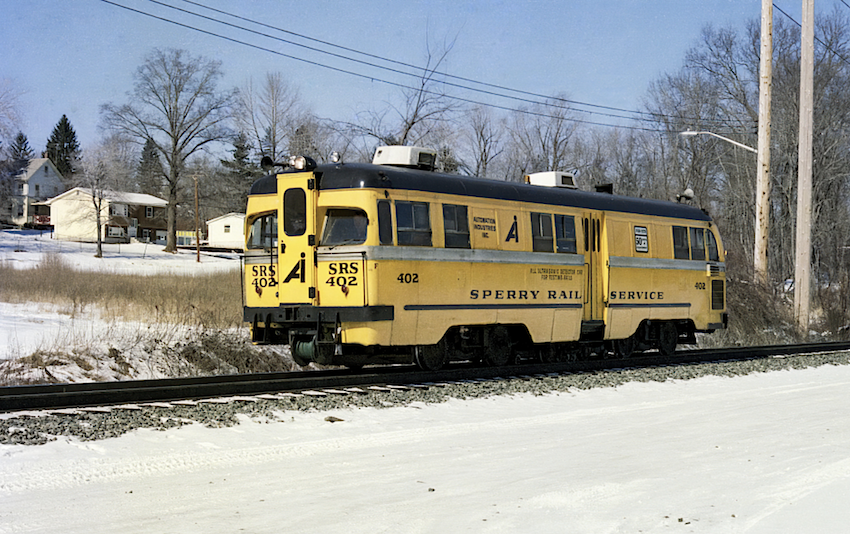  | |
Sperry #402 -- Two Mack Railbuses joined the Sperry fleet in 1958;
built four years prior, the Macks had been owned by the New Haven railroad. Newcomers #402 and
403 were loaded with all ultrasonic detection equipment before being placed in service. Photographer
Rob Pisani took this photo of SRS #402 while it was running on Conrail in 1979. |
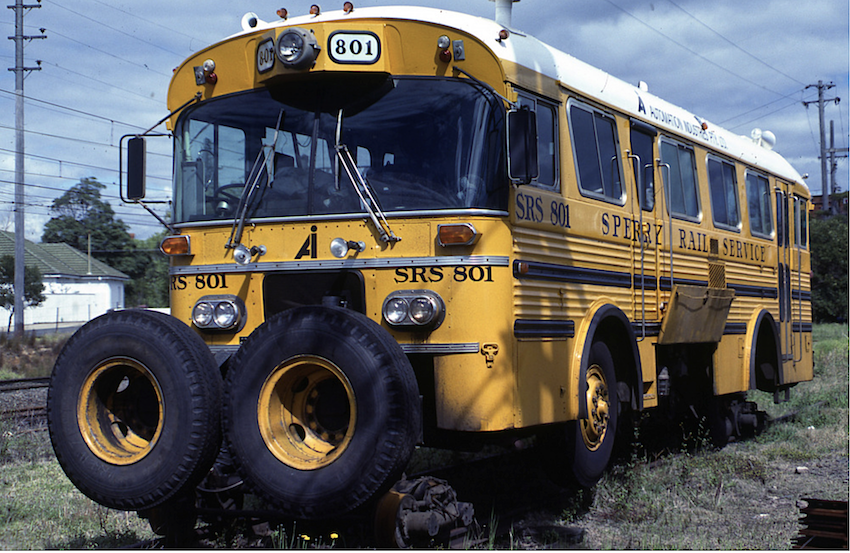
Sperry Hi-Rail Bus - Used almost exclusively in Australia, SRS
#801 was built in 1969 on a Ford Truck platform; the unique inspection unit was cited as one
of the earliest examples of high-rail vehicles in service on Sperry. There is an internet photo
that suggest the HRB once belonged to Penn Central? (Eric Walsh photo in 1979 / Vince Porreca
collection) |
|
Sources:
|
|
| 1 November 2026 | |