Artwork from Greg Palumbo collection |
|---|
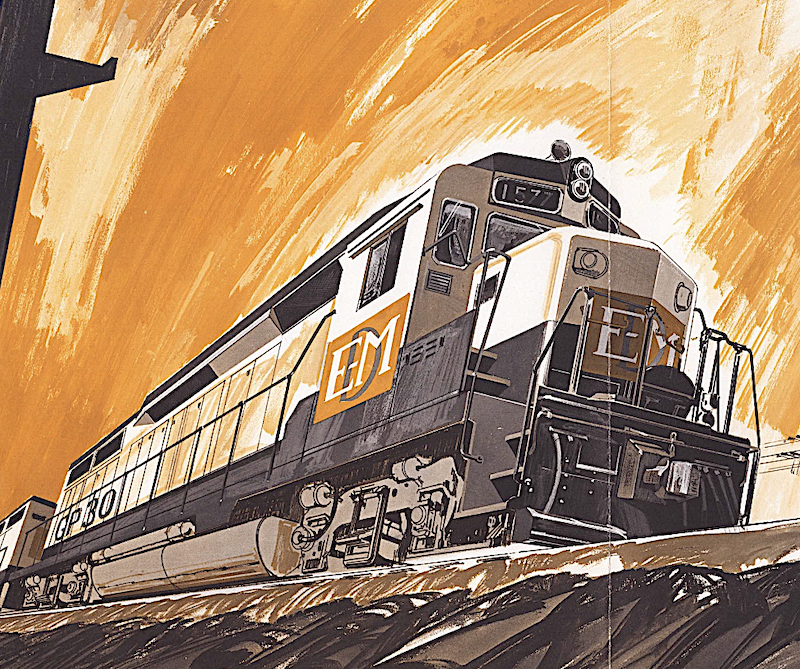
The railroad artistry of Tom Fawell is worth far more than
a thousand words. Using vibrant color and a dark mood, he crafted dynamic scenes that captured
the speed, power and drama of EMD-built locomotives at work. His style was without question
controversial. People within and outside the locomotive builder's organization could be heard
to say, "Where are the wheels?" and "Doesn't this guy know the sky is always blue?""
Fawell's unique artistic style none-the-less proved highly successful for the locomotive builder, and evolved into a 15-year collaboration (1961 to 1976). | ||
GP3O -- Fawell's first artwork assignment
for the LaGrange locomotive builder (shown above) was to create illustrations to support
the introduction of the new four-axle road-switcher that bore styling touches from General
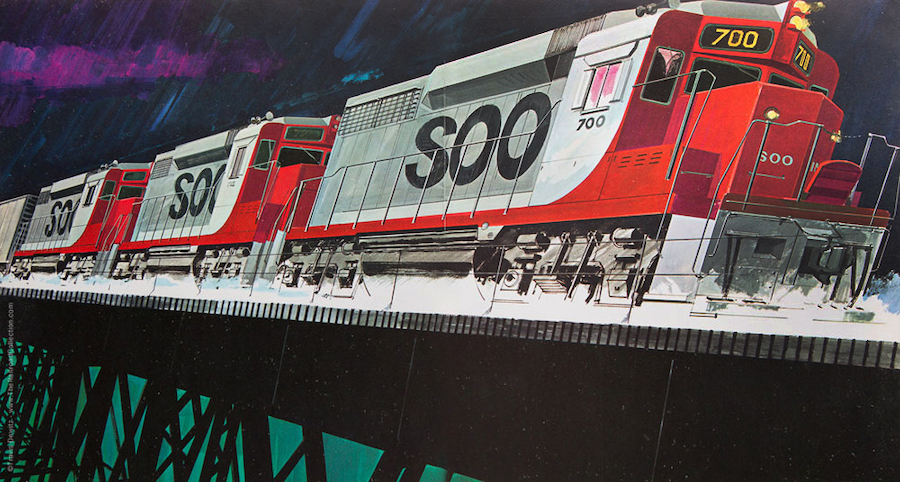
Motors automotive design studio. In a later artwork, he depicted a trio of SOO Line GP30s
crossing the historic St. Croix River Bridge. |
 | |
|---|---|---|
| blank | ||
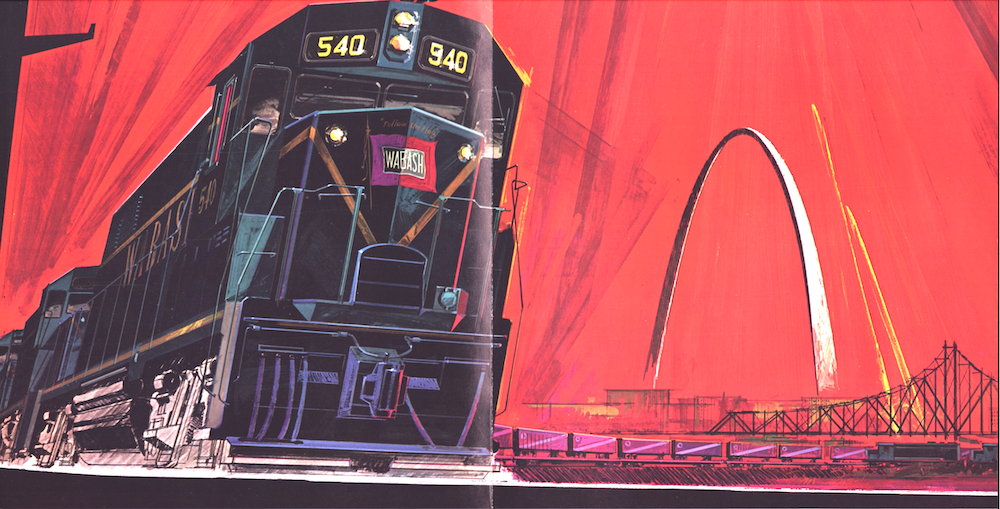
GP35 -- From 1964 comes this Fawell
illustration of new Golden-banded Wabash GP35s in "Road Runner" service. The all piggyback
trains between St. Louis and Detroit provide the kind of on-time, cost-cutting, record-setting
speed service required by Motor City automakers striving to remain strong in a highly
competitive market. |
 | |
| blank | ||
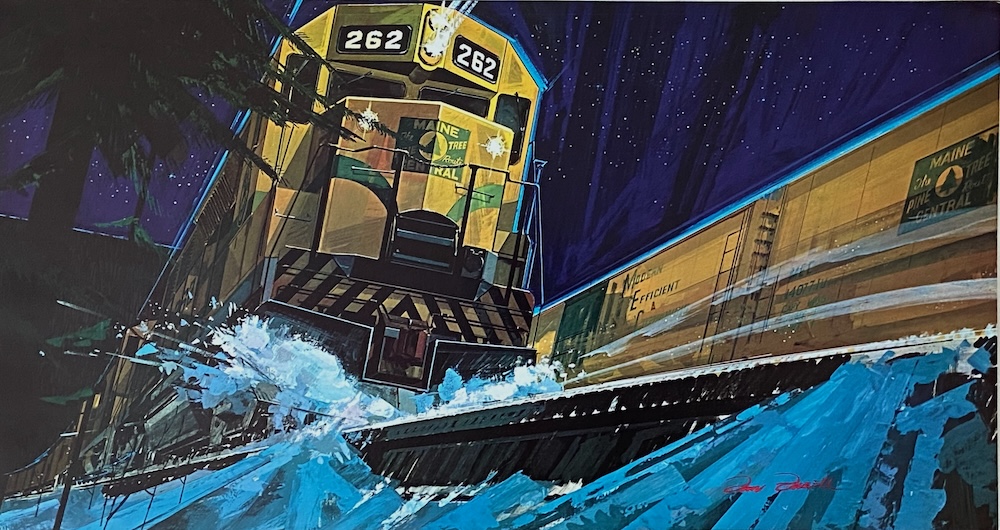
GP38 -- It was not uncommon for Fawell
to visit a railroad's operating territory to familiarize himself with the traffic and geography
prior to transferring the scene to canvass. Hence, there is a strong likelihood that in this
Fawell illustration the viewer is seeing a consist of Maine Central "yellow bird" locomotives
pass through Crawford Notch in New Hampshire's White Mountains. |
 | |
| blank | ||
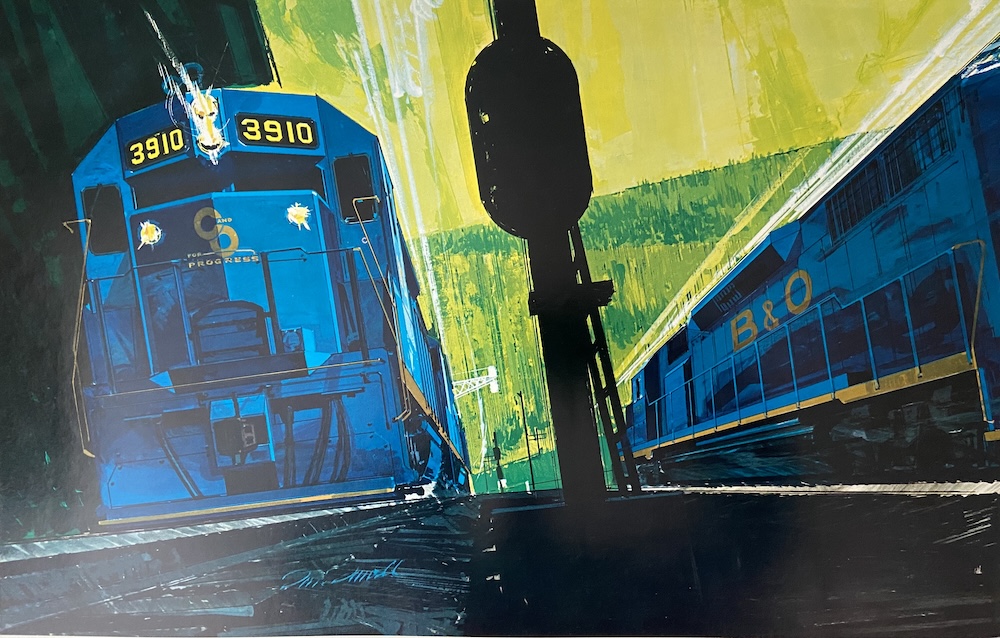
GP39 -- This Fawell illustration is
interesting from a couple of different perspectives. First, the subject is the GP39 which was
a very low-run production model (1969-1970). Only 23 were built with all but three going to the
Chesapeake & Ohio as (#3900-3912) Next, it is rare when two different railroads are portrayed in
the same promotional artwork. Look closely and notice that the background loco is lettered for
the Baltimore & Ohio. As we now know, the two railroads later became part of the Chessie System. |
 | |
| blank | ||
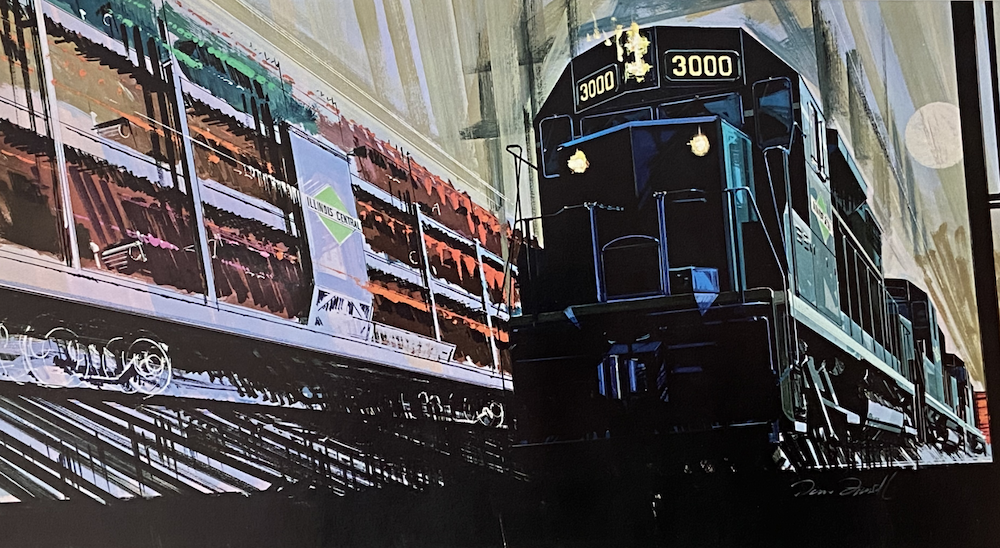
GP40 -- Trackside observers were mildly
surprised in early 1966 when shiny new black GP40s arrived bearing a "Green Diamond" logo
beneath the cab windows. They were the first turbo-charged locomotives ever purchased by the
conservative-minded Illinois Central. The initial order was for forty units, with an additional
forty placed in service the following year. Although there is no visible landmarks, there is a
good chance that it is somewhere in Fawell's vision of mid-america. |
 | |
| blank | ||
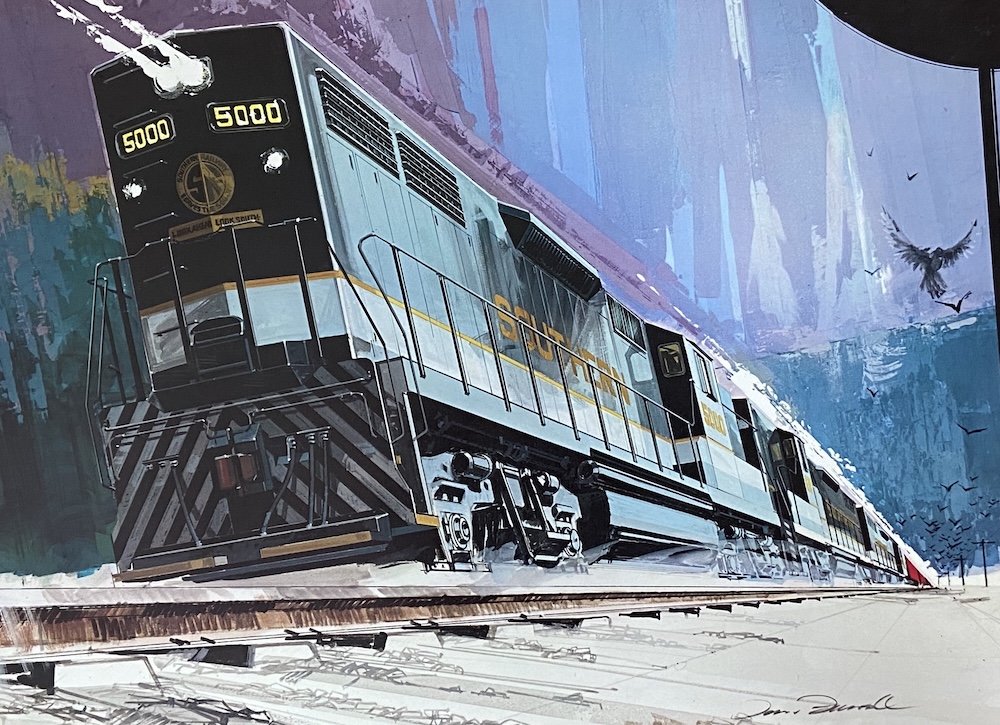
GP38-2 -- With the advent of the hood-type,
locomotive it became standard practice for Southern Railway to operate freight power long hood
forward or LHF as depicted in Fawell's scene of three SR GP38-2s. This particular artwork is
noteworthy for the unusal level of detail applied to the leading truck. In-spite of criticism,
Fawell believed that locomotive wheels were not needed in his work, and therefore he purposely
left them out whenever possible. |
 | |
| blank | ||
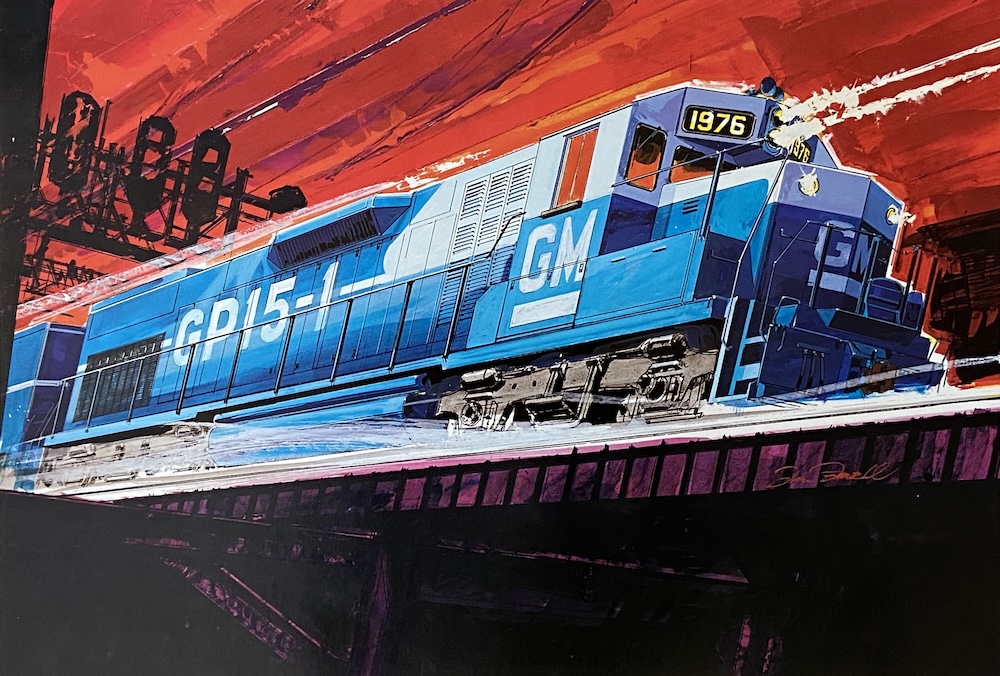
GP15-1 -- In June of 1976, Electro-Motive
Division introduced the GP15-1. It was marketed as an alternate approach for companies engaged
in the rebuild or upgrade of mid-range horsepower locomotives. More than likely, it was the last
EMD promotion campaign after fifteen years to bear Fawell's unique style and artistic brush
strokes. |
 | |
| New: 1 January2026 | ||